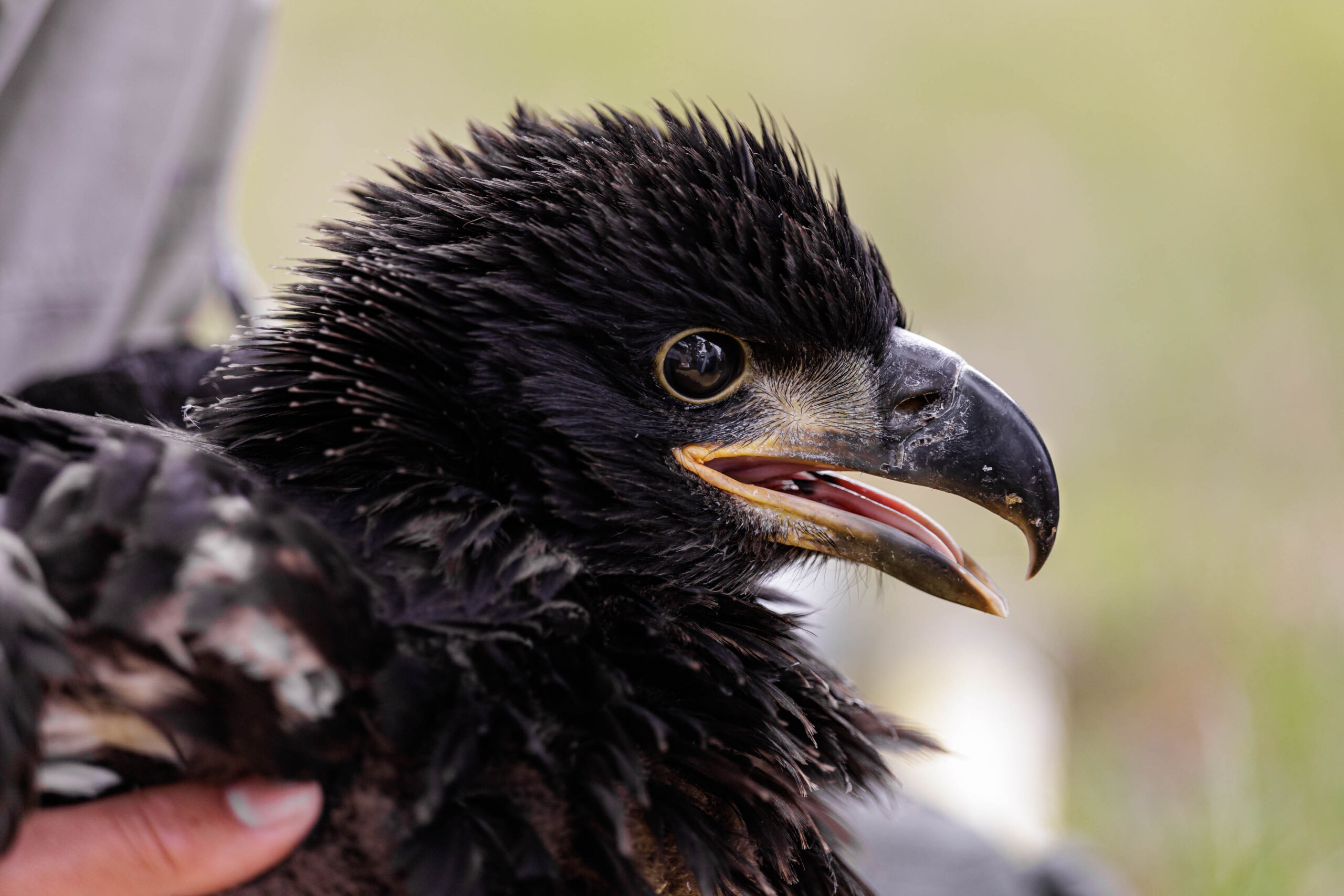
When I received an invitation to witness Maine’s bald eagle conservation efforts firsthand, I knew it was a rare and meaningful opportunity. As a wildlife photographer, I’ve always had deep respect for the quiet, tireless work that happens behind the scenes. What unfolded was an unforgettable day with a team of dedicated biologists, and one very scruffy young eaglet.
Witnessing Maine Bald Eagle Banding
The property owners were kind enough to include me as their family joined a team of biologists working to tag a young bald eagle nesting on their property. Opportunities to witness Maine bald eagle banding are rare, and access like this depends heavily on the generosity of landowners who support wildlife conservation.
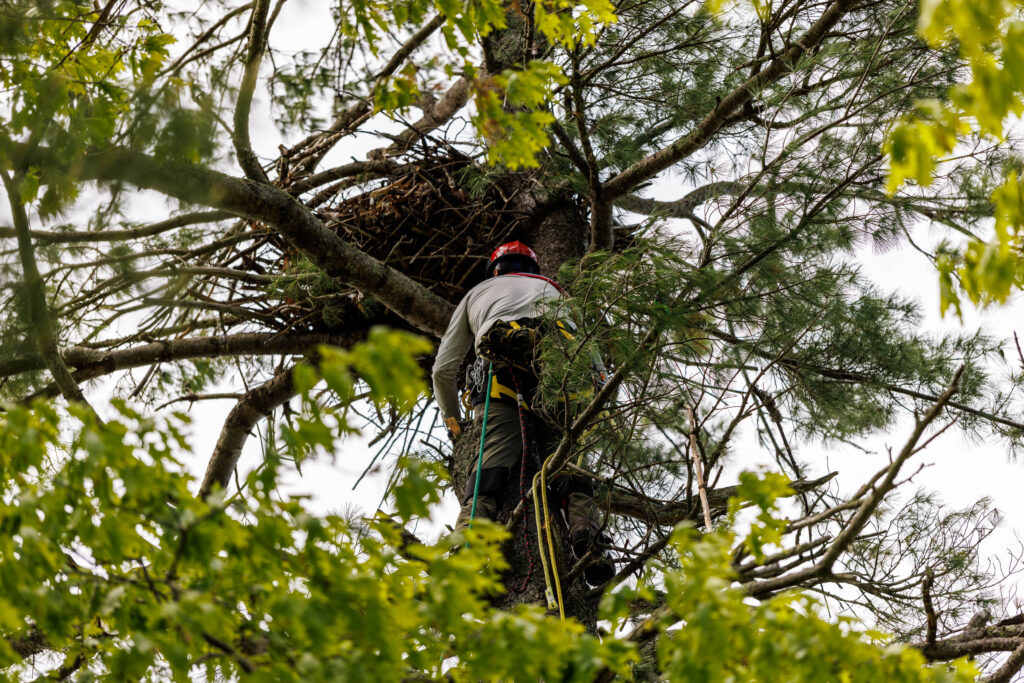
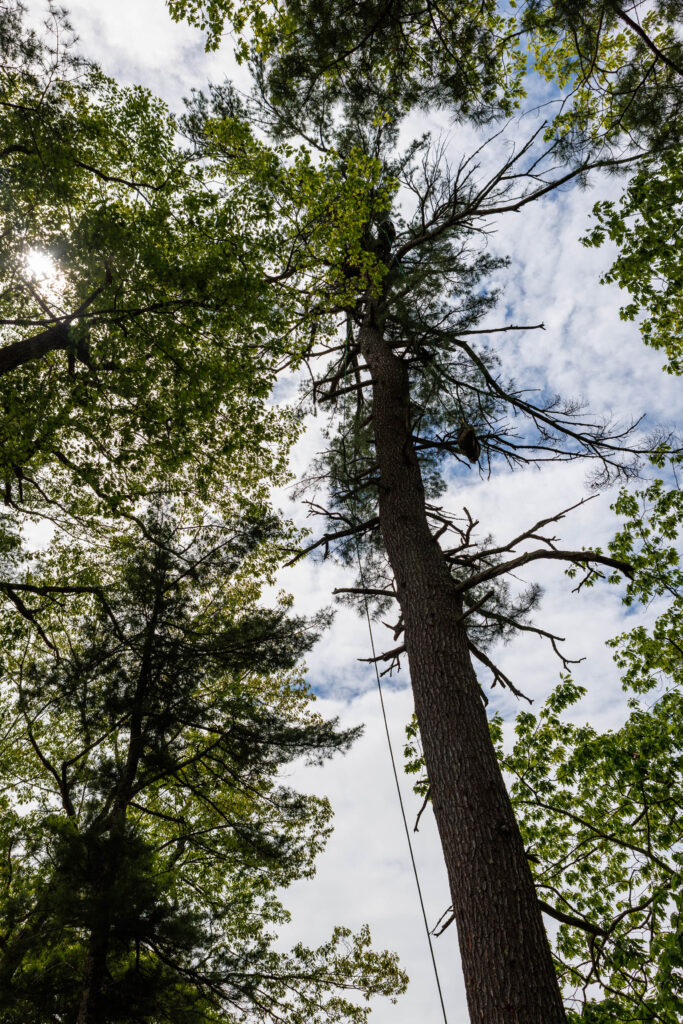
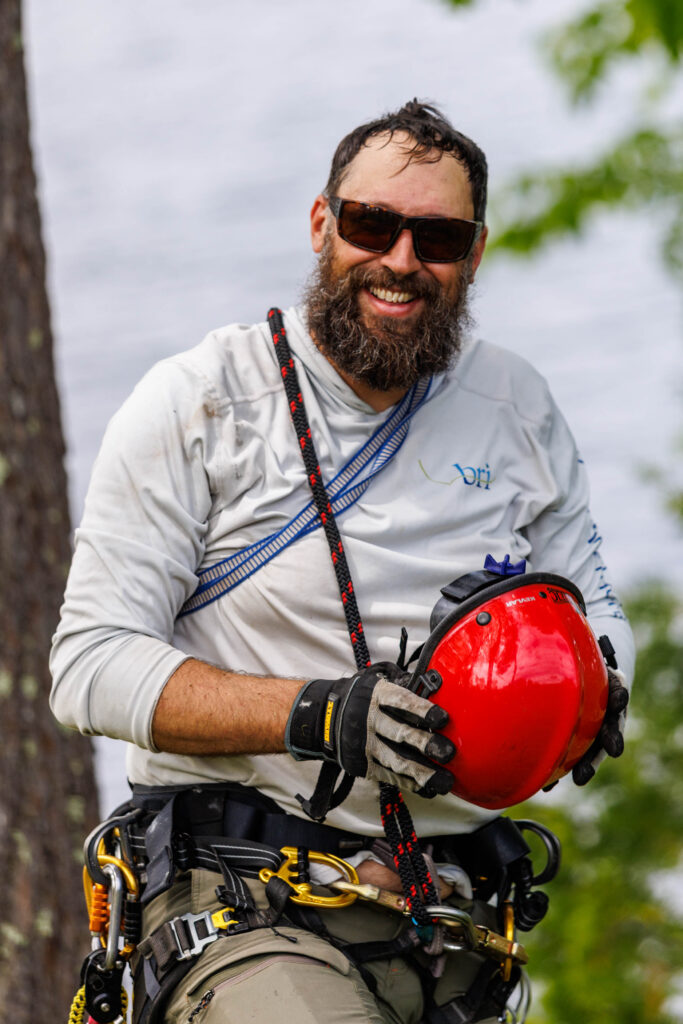
We gathered quietly at the base of a tall pine tree where the nest sat high above us. The group watched in silence as one member of the team prepared for the climb. The atmosphere was focused and calm, a mix of anticipation and respect for the delicate work about to begin.
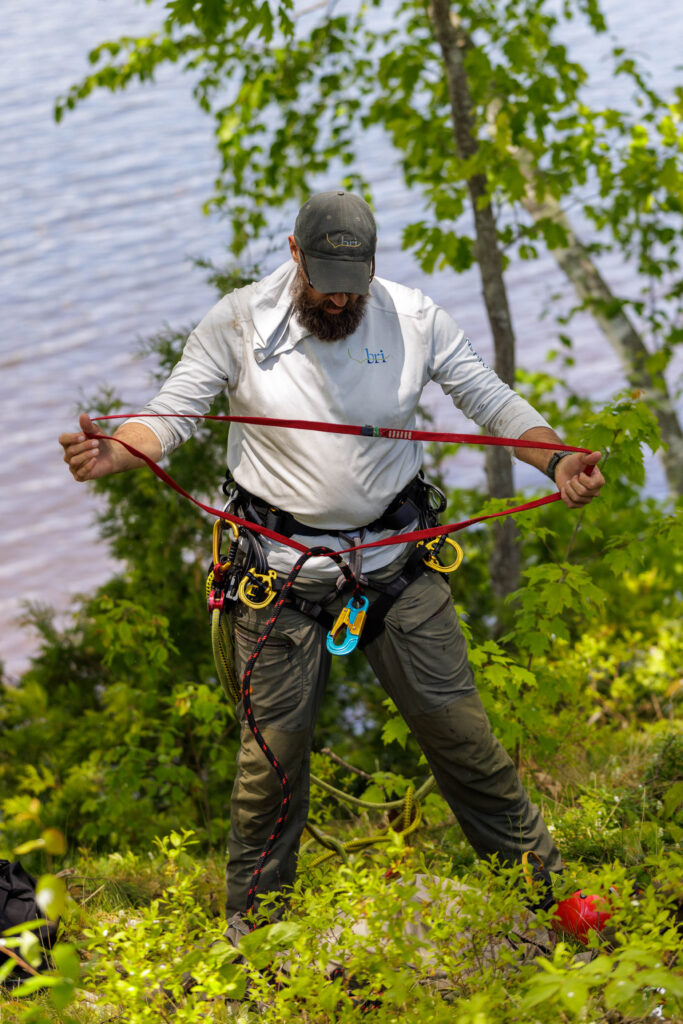
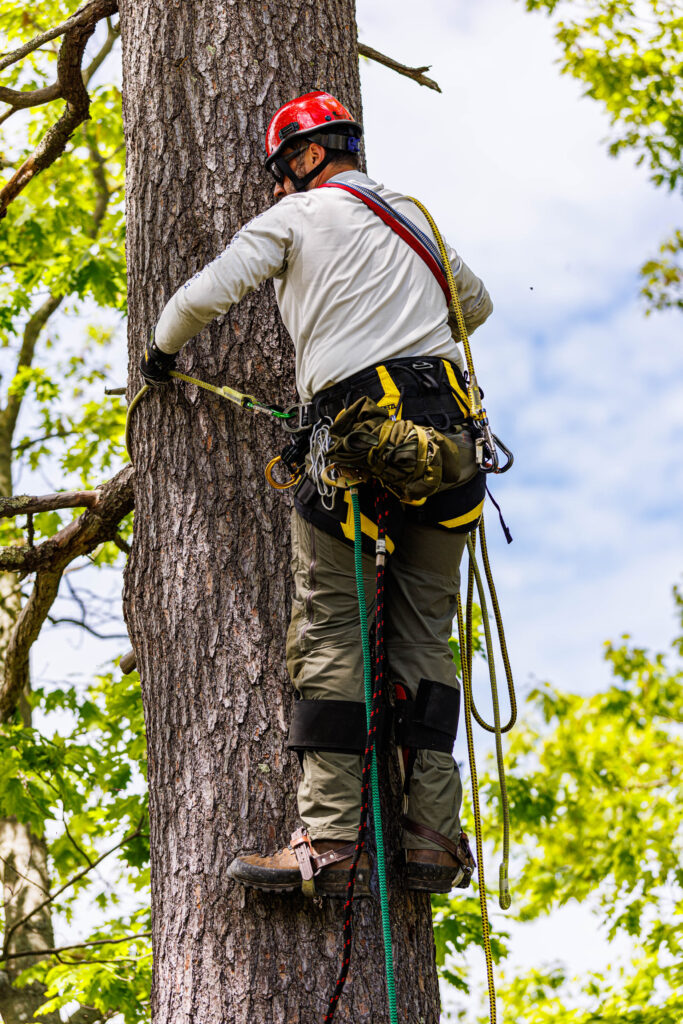
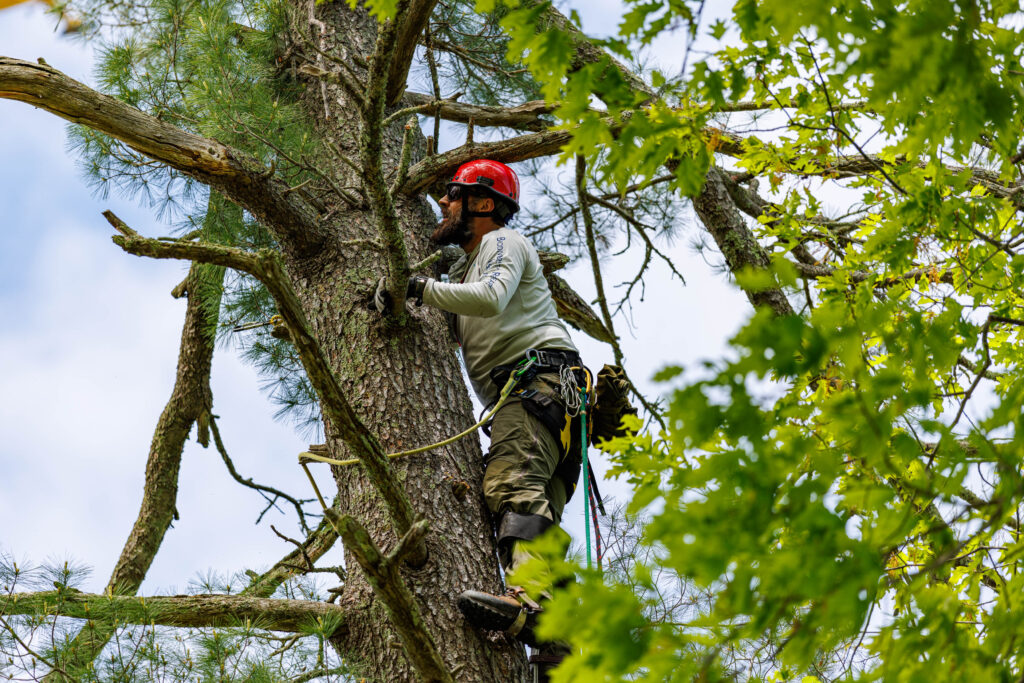
Retrieving the Eaglet from the Nest
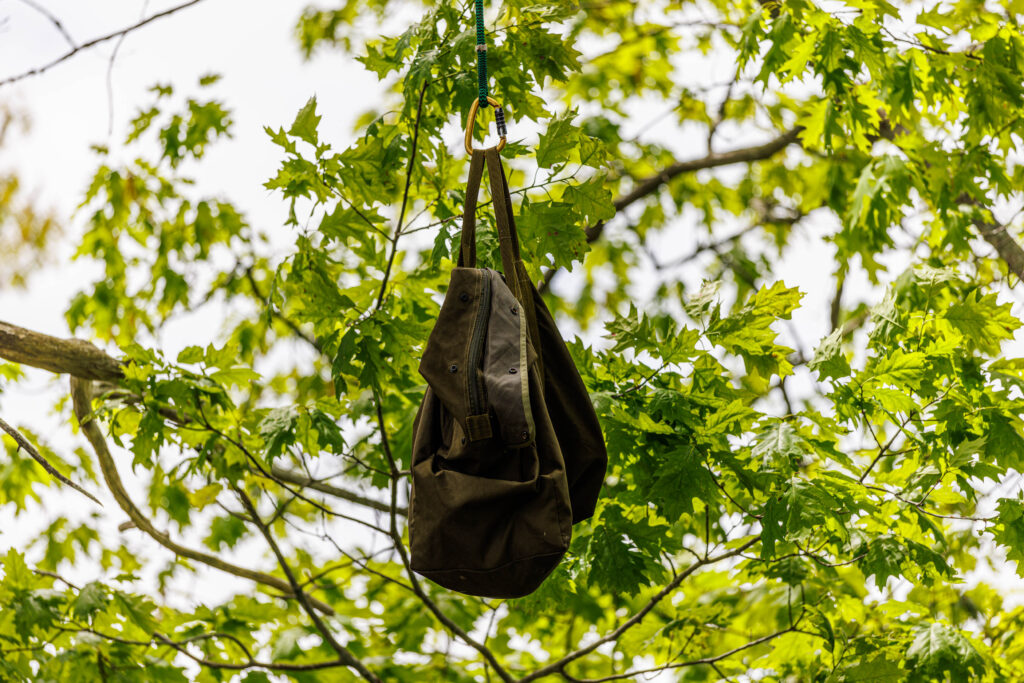
Once he reached the nest, the biologist carefully secured the eaglet in a soft duffle bag designed specifically for this type of work. After gently placing the bird inside and zipping the bag closed, he began the careful process of lowering her to the ground.
Everyone below remained still and quiet, watching with intense focus as the young eagle slowly descended. Moments like this highlight just how precise and careful the bald eagle tagging process must be to ensure the safety of both the bird and the team involved.
The Bald Eagle Tagging Process
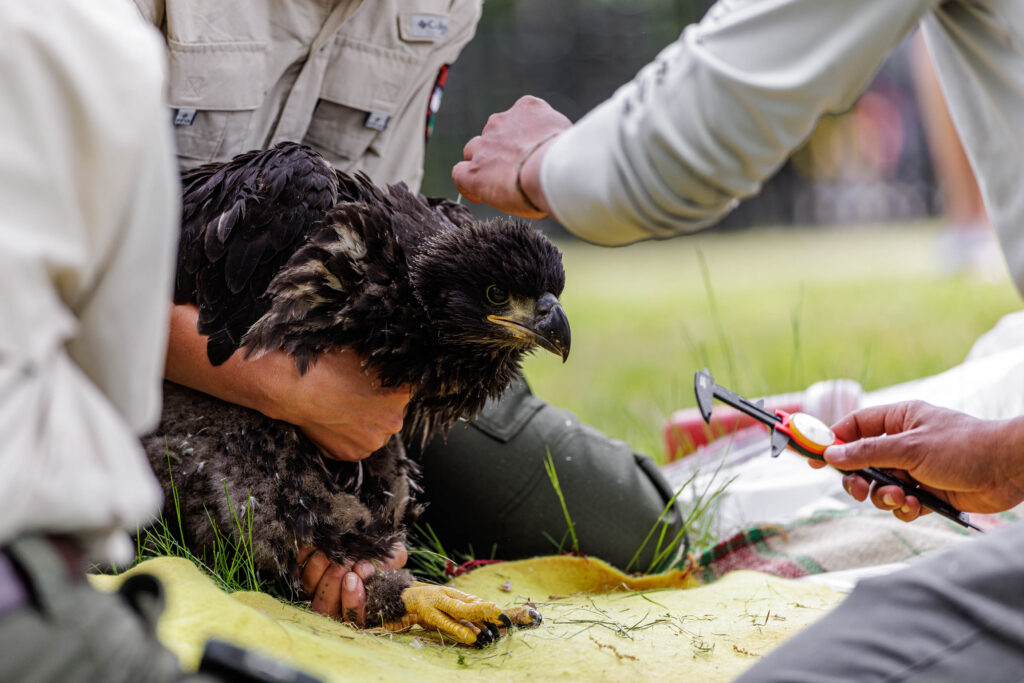
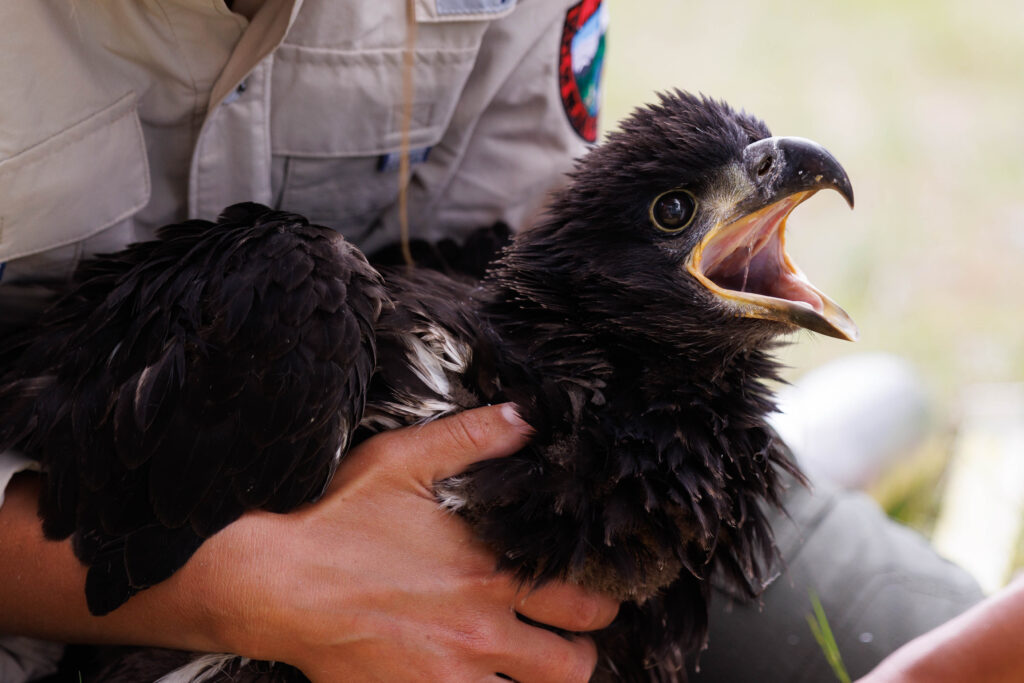
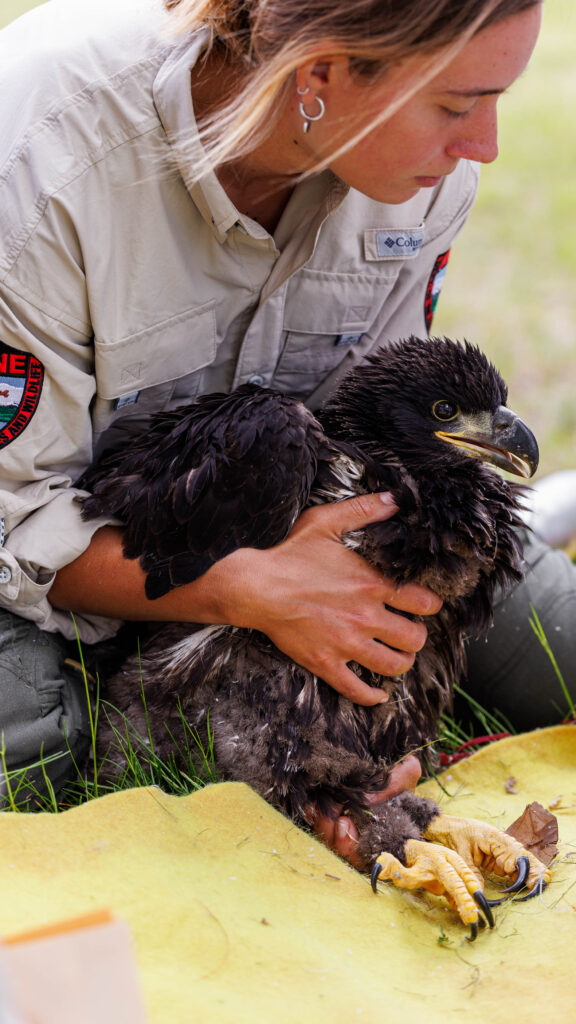
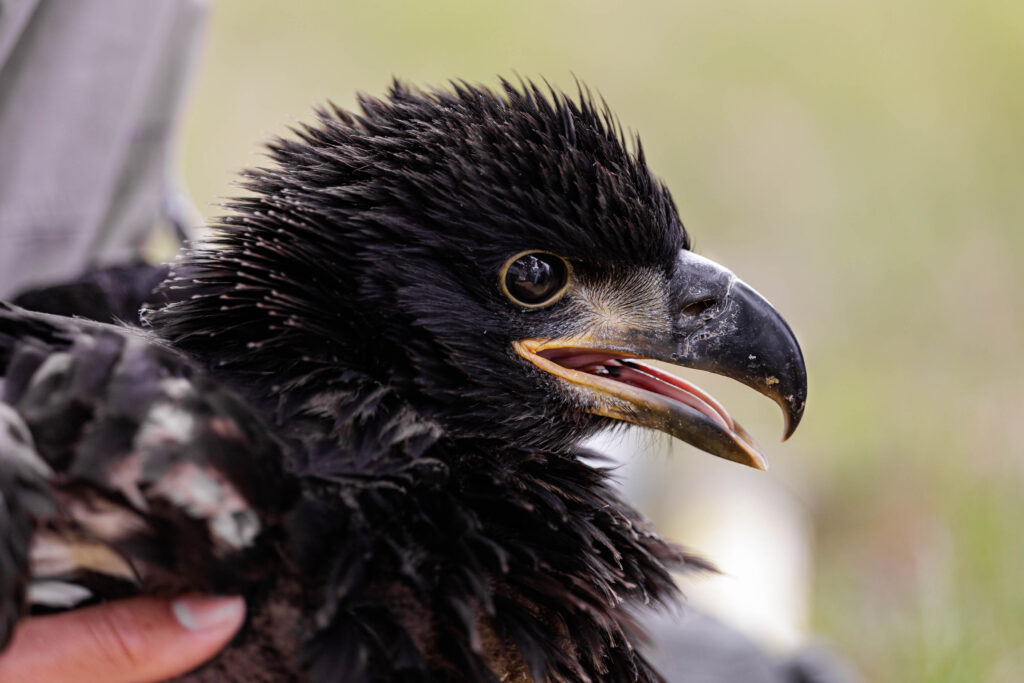
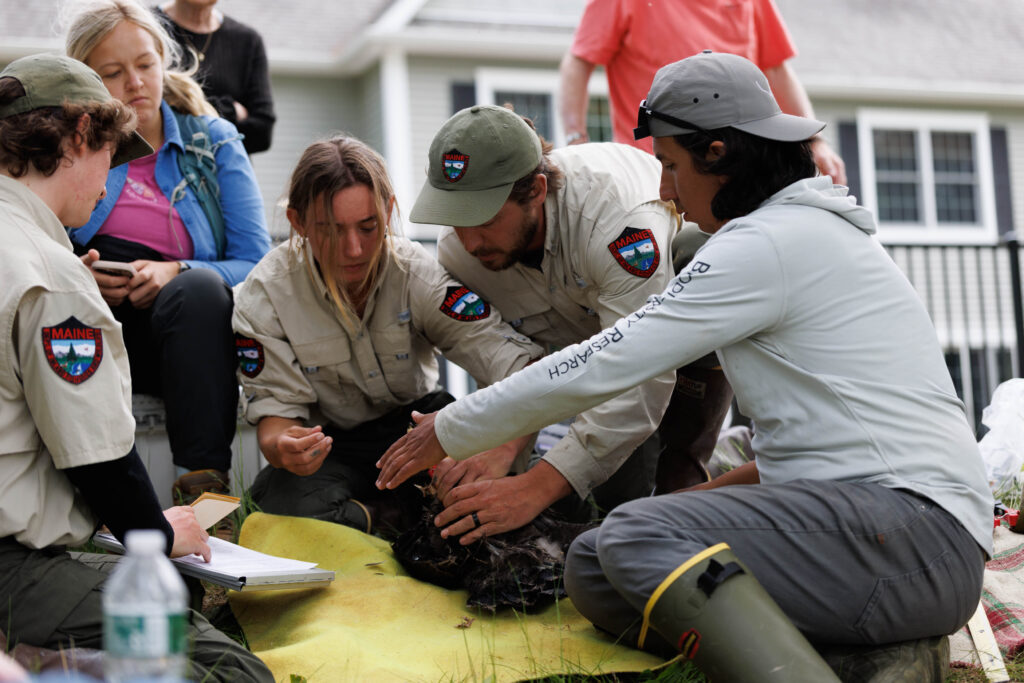
Once the eaglet reached the ground, the team worked quickly but calmly. The young bird, believed to be a female around six or seven weeks old, was handled with incredible care throughout the banding process.
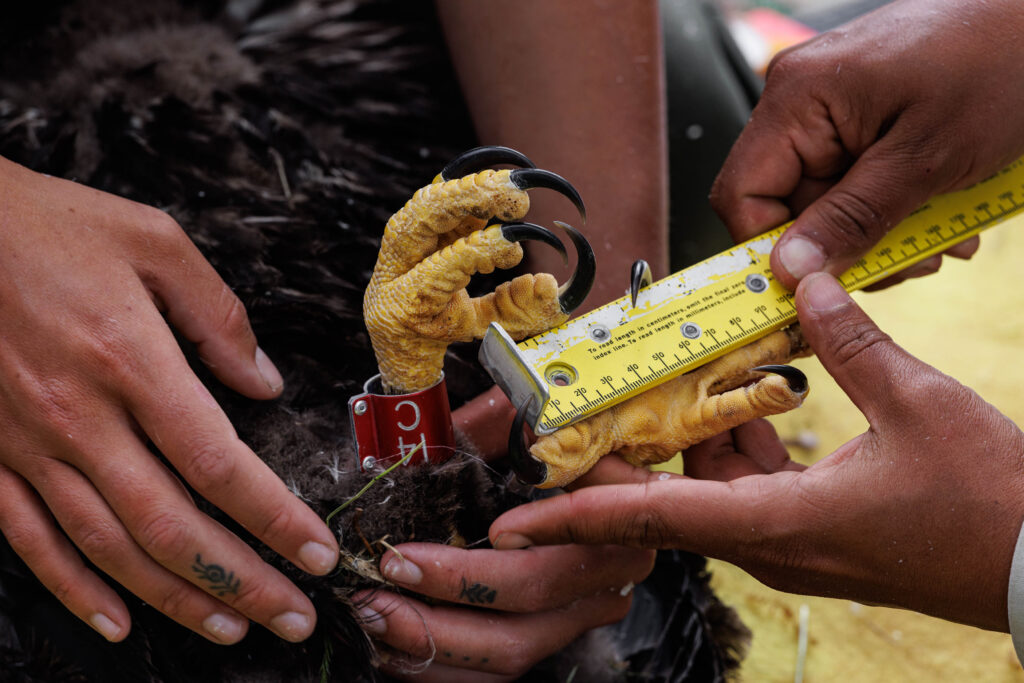
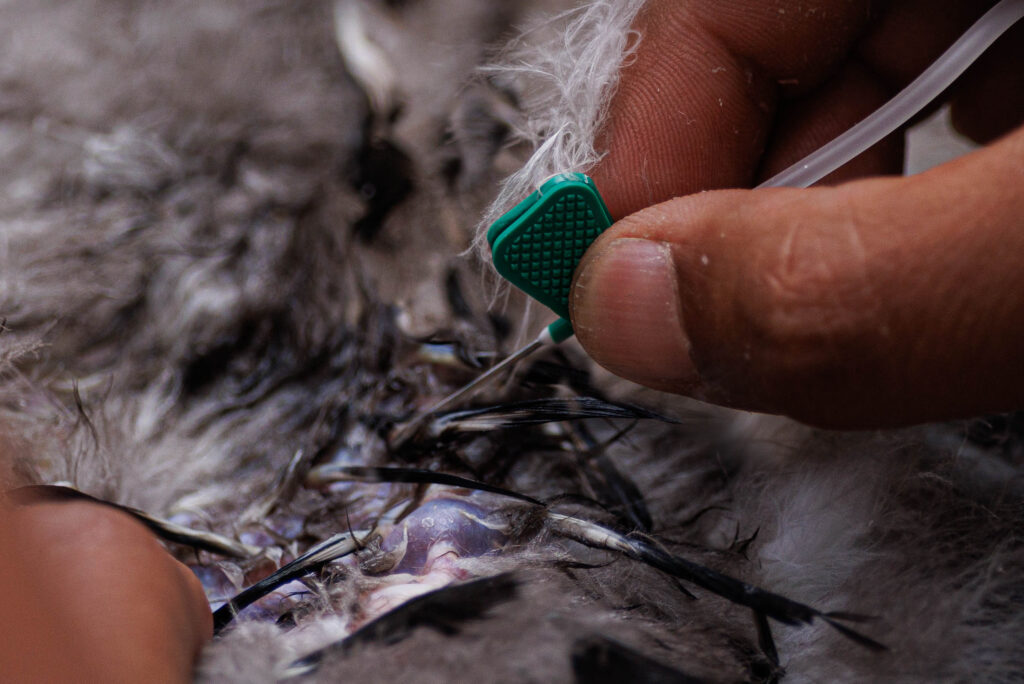
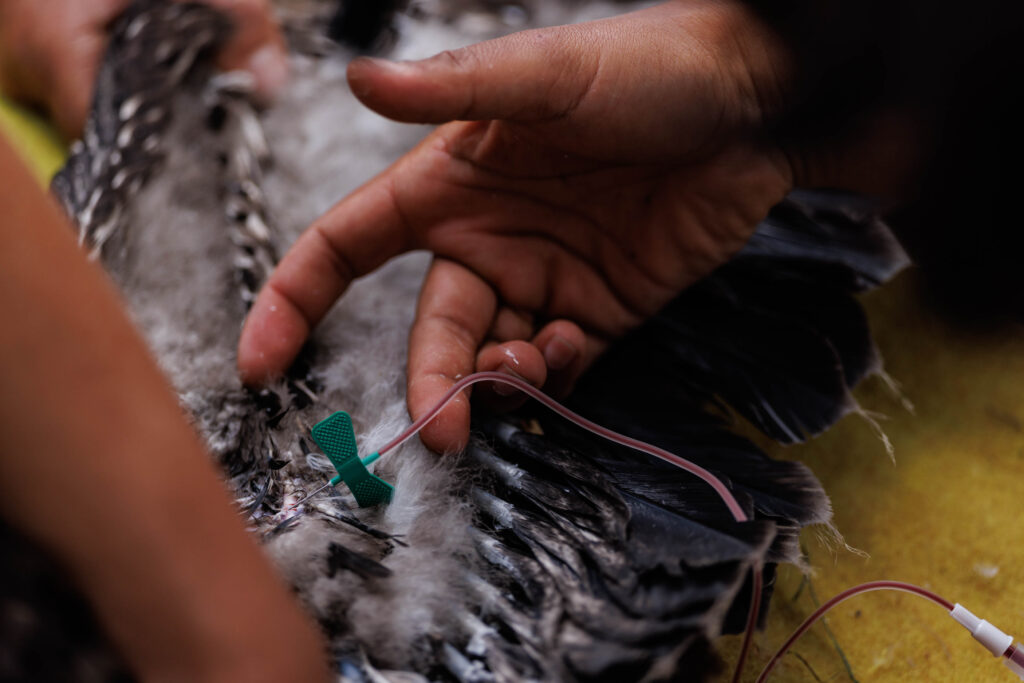
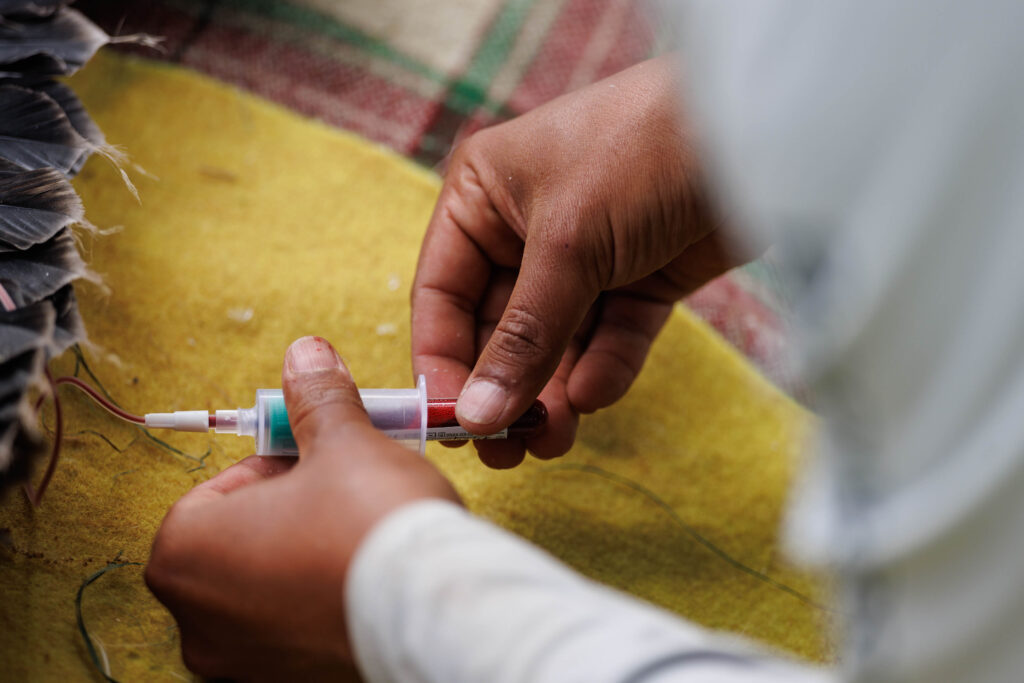
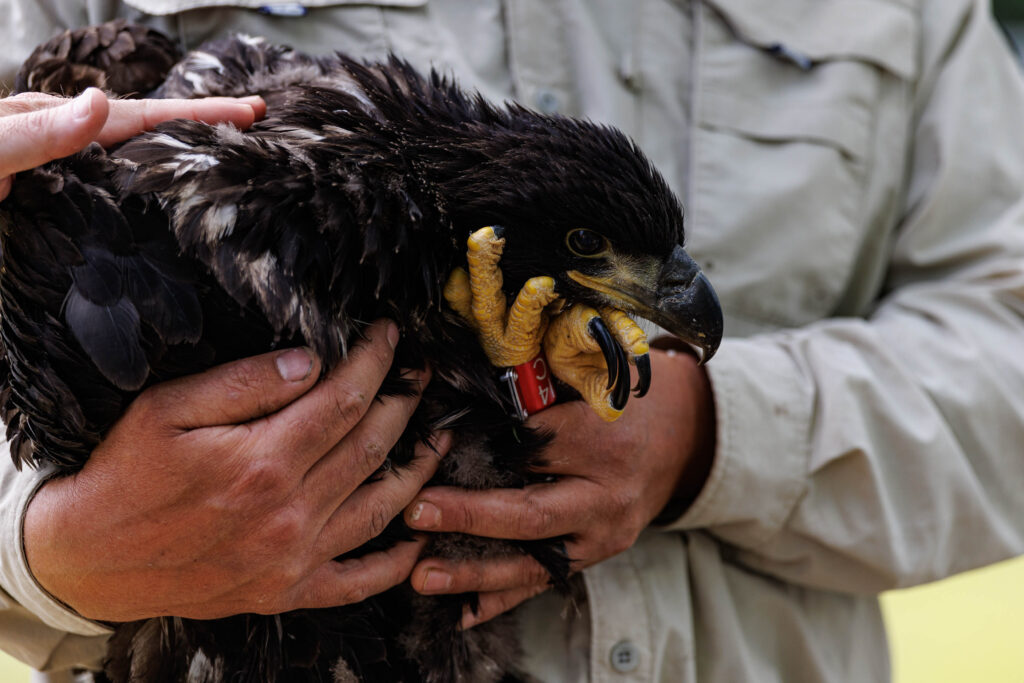
During Maine bald eagle banding, biologists collect several important pieces of information used to monitor eagle populations. The eaglet was measured, had a small blood sample taken for research purposes, and received two identification bands that will help track her throughout her life.
What the Eagle Bands Mean
The red band placed on her right leg identifies her specifically as a Maine eagle. The silver band on her left leg connects her to the national tracking system maintained by the U.S. Fish and Wildlife Service.
Interestingly, adult eagles receive their bands on the opposite legs, a small detail that helps researchers quickly identify birds and understand their life stage when they are observed in the wild.
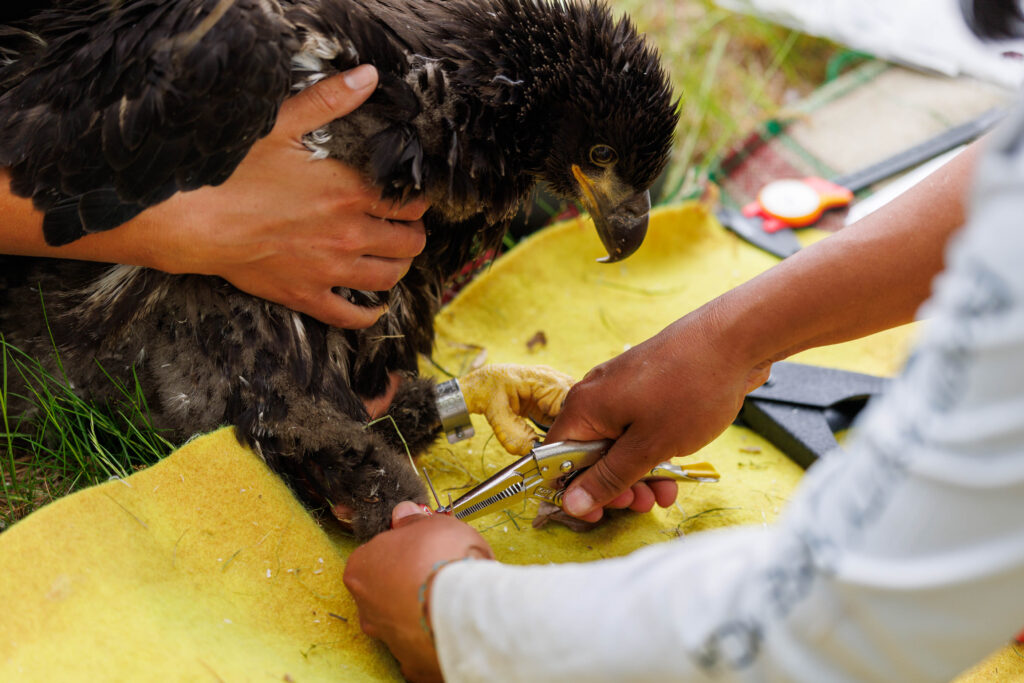
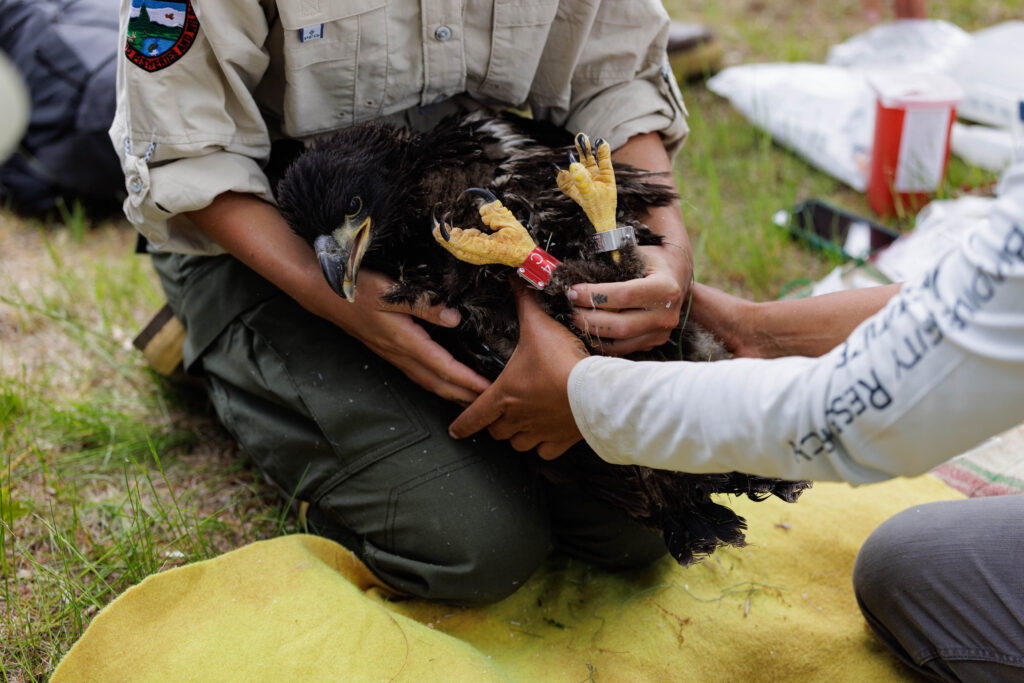
This eagle now carries a red Maine band and a silver U.S. Fish and Wildlife Service tag for tracking and research.
Documenting the Process Through Photography
Throughout the entire process, I kept my distance and photographed using a long zoom lens. As a Maine documentary photographer, it was important to capture the moment without interfering with the biologists or disturbing the eaglet.
Wildlife photography during conservation work requires patience and restraint. My goal was to document the bald eagle tagging process in a way that respected both the bird and the professionals carrying out this critical research.
Why Bald Eagle Banding Matters
Watching this level of care and dedication firsthand is something I will never forget. The team’s passion for protecting Maine’s wildlife was evident in every action and every quiet exchange between them.
Experiences like this reveal the immense effort that goes into wildlife conservation, work that often happens far from public view but is essential for protecting species like the bald eagle.
Final Thoughts
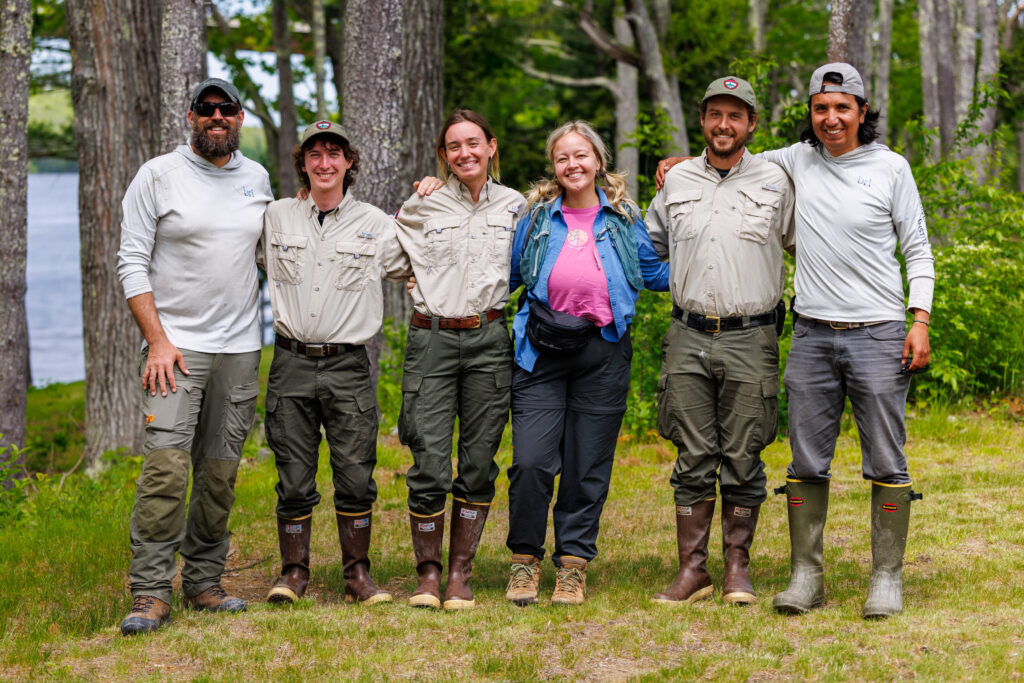
I’m incredibly grateful to the biologists and volunteers who dedicate their time to safeguarding Maine’s wildlife, and to Rick and Michele for allowing me a behind-the-scenes look at such an intimate conservation effort.
Documenting Maine bald eagle banding through photography is my small way of supporting their mission and raising awareness about the conservation work happening right here in our backyard.
If you enjoy stories like this and want to see more wildlife and conservation photography from Maine, consider following my work and sharing this post with others who care about protecting the natural world.

leave a comment